
Further Down the Path: What Divine Providence Can See from Connecticut and Queens
Detroit's Lithuanian parish has until July 31 to speak into its archdiocese's survey. Three parishes to the east are further down the same road — their record shows what the window is worth.

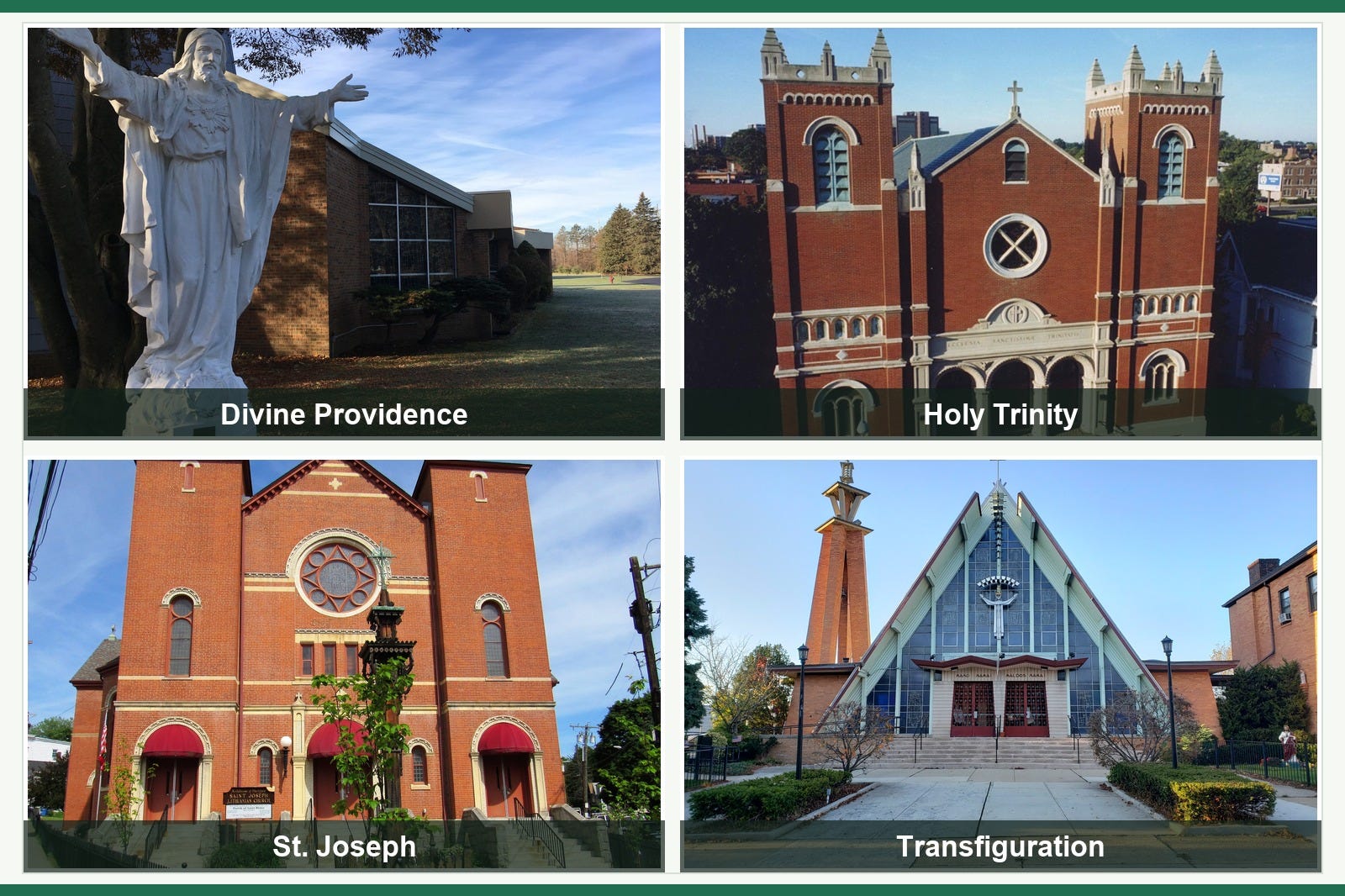
In Detroit, the calendar is public. The Archdiocese of Detroit’s Listening Session Feedback Survey is open until July 31. Discernment follows this fall. Decisions come in early 2027. Dievo Apvaizdos — Divine Providence, in Southfield — is the archdiocese’s one Lithuanian parish, and it stands inside that process with no closure decree issued. The stakes are already on paper: the Detroit News reported in May that under at least one proposed model, Divine Providence is among ten parishes in its planning area that would stop holding weekend Mass — one model among several, with at least 58 parishes flagged archdiocese-wide, and nothing decided. The survey is the channel the process provides for feedback on exactly those models. That is the definition of an open window: the proposals exist; the decision does not.
What a window is worth is not a theory. Over the past two days, this record published the stories of three Lithuanian parishes on the East Coast — Maspeth, Hartford, and Waterbury — each further down the same road Detroit is walking now. Read together, they are one map with three positions marked on it. The road they share is a process — a diocese deciding the future of a Lithuanian parish — not a destination: the three reached three different places, and the difference between those places is the lesson.
Maspeth: the window open — and used
The Church of the Transfiguration in Queens received a closure letter on February 16, 2025. The response did not wait for a decree. Within weeks there was a petition — more than 850 signatures in the record’s current count — two landmark filings with the New York City Landmarks Preservation Commission, a coalition of preservation organizations, a council member’s letter, and, by September, the President of Lithuania standing in front of the church. At the end of August 2025, the Diocese of Brooklyn said in a letter read at Masses that the church would not be closed or sold. Weekend Masses continue there — on terms the diocese calls temporary, which is why the record renders Maspeth unresolved rather than saved. But the parish community is still in its church, and the decision-makers moved.
What Maspeth shows: the response that works starts before the decision — and visibility, organized early, changes what a diocese can quietly do.
Hartford: the window closing
Švč. Trejybės — Holy Trinity — printed three assurances in its parish bulletin in February 2025: that the church was financially stable, that it could pay its bills, and that weekend Masses would continue as usual. Fifteen months later, none of the three held. Regular Masses ended on May 30, 2026. Parishioners were told after Mass, not consulted before it; no canonical appeal was filed while the window was open. The community’s fight continues — but it is now a fight for the building, a hoped-for Lithuanian cultural center, and the retainer for a canon lawyer is still being raised after the fact.
What Hartford shows: assurances are not the process. The window is before the letter.
Waterbury: after the window — because someone acted inside it
Šv. Juozapo — St. Joseph’s, the first Lithuanian Roman Catholic parish in New England — closed on September 30, 2023, one hundred and fourteen years to the day after it first entered the Lithuanian paper of record. But in its final weeks, a parishioner working with a canon lawyer mounted an appeal to the Vatican. Almost three years later, no ruling has been published — and the church still stands: not sold, not demolished, in Catholic hands, and explicitly excluded from the sale of the rest of the parish campus in 2025. The record’s assessment of that campaign reads, “the community has so far prevented a complete ending.” The cost has a number too: nearly $10,000 of the canonical fight fronted from one parishioner’s own pocket.
What Waterbury shows: even after the window closes, the Church’s own process can keep the question open — and the later the start, the steeper the price.
Detroit, reading the map
Divine Providence is earlier on this road than any of the three. No letter has arrived. No notice has been read after Mass. And unlike any of the three at this stage, Detroit’s parish walks into its process with the case already made — in the archdiocese’s own published numbers, analyzed line by line in these pages. Measured by size, the parish is small: 144 weekly Mass attendees, #191 of 204. Measured by stewardship, the same parish ranks #9 of 200 archdiocese-wide in savings per weekly attendee — the top five percent. Which of those two rulers gets used is precisely what a listening process exists to decide. The parish is one of thirteen ethnic parishes remaining of 209. Its founding covenant with the archdiocese exists in writing, from 1968. And the documented reversals in the American record all point the same direction the East Coast does: what decides these stories is done inside the window.
Three parishes east of Detroit compress into one sentence: everything that worked was done while the window was open — and Detroit’s window has a date on it.
What you can do before July 31
If Divine Providence is your parish — or was your parents’ — complete the Archdiocese’s Listening Session Feedback Survey before July 31: form.jotform.com/261034294481152. It is the open channel the process itself provides. The parish’s case, in the archdiocese’s own numbers, is here to draw from. And if you are reading this after July 31: the window has stages — discernment runs through the fall, decisions come in early 2027 — and the parish’s case does not expire with the survey.
Read the three dispatches as one story. Maspeth · Hartford · Waterbury. Each carries its own ways to help, and each campaign is tracked at /under-threat.
If your parish is somewhere else on this road, start at saveourlithuanianparishes.org/start-here — the window lesson is the same in every diocese.
The record will carry Detroit’s outcome as it carried the others’, whichever way it goes. What the East Coast shows is that the ending is not written in the letter. It is written in the weeks around it.
Sources
This piece is a synthesis of published, verified reporting; every claim traces to one of the four bodies of work below, each of which carries its own source apparatus.
The three East Coast dispatches: Still Open, Still Undecided — Maspeth · Fifteen Months — Hartford · Closed, Not Ended — Waterbury
The Divine Providence series: The Numbers Behind Divine Providence · By the Numbers: The Archdiocese’s 13 Ethnic Parishes · In Writing: the 1968 Letter · Do Your Part; the Detroit News planning-area reporting is documented in the parish’s case record
The record: Divine Providence’s parish record · Every active campaign · Documented US closure reversals